

What to know about 2026 European Capitals of Culture – DW – 01/01/2026
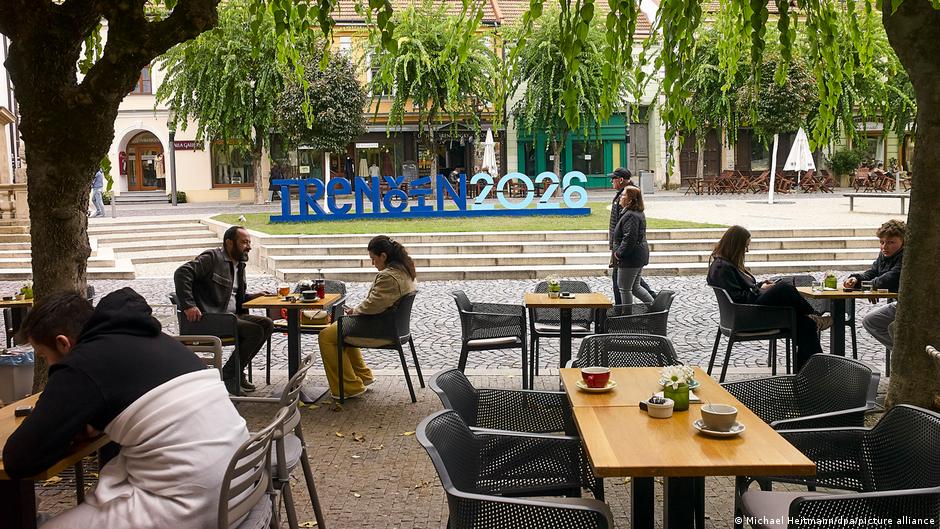
Trencin is a picturesque city in western Slovakia, best known for its historic castle perched on a rock above the city. Below it, the city center is nestled around a large square lined with cafes and bars.
The old town is also home to a magnificent synagogue that was recently renovated and stands as a powerful symbol of Trencin’s centuries-old Jewish community. Today, it occupies a central place in the city as both a tourist attraction and a venue for cultural events.
Trencin is home to around 55,000 people. Like much of Slovakia, the city near the border with the Czech Republic has been affected by depopulation, driven largely by political disillusionment. Many residents are dissatisfied with the left-wing populist government led by Prime Minister Robert Fico, whose cooperation with nationalist forces and confrontational stance toward the European Union and NATO, as well as his pro-Russia policies, have sparked widespread concern.
In response, Slovaks across the country have repeatedly taken to the streets, with regular protests signaling growing opposition to the current regime.
Festival for the entire city
Trencin is consciously trying to break away from this conservative image. In counterpoint to the national politics, the city presents itself as open and international — something akin to the US city of Austin, which has developed its own progressive profile in politically conservative Texas.
Several projects in the program reflect this approach. Trencin’s Light Art Festival uses light installations to retell the city’s story and create a sense of new beginnings.
The Lively Neighbourhoods project connects entire neighborhoods with festivals and workshops — a practical attempt to overcome social division.
The city’s European Capital of Culture motto is “Awakening Curiosity.” Events on the agenda include cabaret performances, neighborhood festivals and activities that promote social cohesion. The city hopes to become more attractive, especially for young people.
Trencin’s cultural center has recently undergone a renovation to the tune of €8 million ($9.4 million). It is equipped with dance and theater spaces, studios, workshops and a professional film studio. The goal is to attract people from the arts and culture sector and encourage them to stay.
Oulu: ‘Cultural climate change’
Finland consistently ranks among the happiest countries in the world, most recently in the World Happiness Report 2025. It’s known for its hockey players, saunas, heavy metal bands and even bizarre world championships, like air guitar and rubber boot throwing.
Finland is also home to the telecommunications giant Nokia, which makes the northern Scandinavian country a global technology hub. The country also has a diverse arts scene.
In 2026, Oulu aims to showcase all of these features. The northern Finnish city, with a population of around 220,000, is located approximately 600 kilometers (375 miles) from the capital, Helsinki.
Nokia has established a campus in Oulu that focuses on 5G and 6G technologies, while highlighting research and education.
Oulu’s art scene, meanwhile, is distinguished by its close connection to nature.
Ice, saunas and light
The concept behind the events is ambitious. They aim to blend the new and the unexpected, bring people together through culture and connect art and nature in ways not seen before.
The program draws on “typically Finnish” themes — such as snow, ice, saunas and the interplay of light and darkness — with the changing seasons playing a central role in its overall design.
The European Capital of Culture theme in Oulu is “Cultural Climate Change” — a timely message that refers not only to the lasting enrichment of cultural life, but also to the ecological responsibility that we bear.
Why Europe celebrates its cities with culture
When the Greek Culture Minister Melina Mercouri and her French counterpart, Jacques Lang, launched the idea of the European City of Culture in 1985, their goal was to bridge the cultural divide in Europe after the Cold War. Athens was the first city to hold the title, initiating a concept that has become one of the EU’s most successful cultural programs.
According to the European Commission’s website, each year’s Capitals of Culture are intended to “highlight the richness and diversity of cultures in Europe,” “increase European citizens’ sense of belonging to a common cultural area” and “foster the contribution of culture to the development of cities.”
Since 1985, more than 70 cities — including major metropolises like Paris, Amsterdam and Madrid, as well as numerous smaller towns — have held the title.
And indeed, the program has seen measurable success. An EU impact analysis conducted in 2023 on behalf of the European Commission found that between 2013 and 2022, the host cities organized an average of 1,000 to 1,200 cultural activities during the year they held the title, attracting a total of 38.5 million people. Visitor numbers in the selected cities rose by an average of 30% to 40%. This increased international visibility has given cultural tourism an enormous boost.
Successes and failures
In 1990, Glasgow, Scotland, went from being known primarily as an industrial city to a cultural hub.
In 2010, the Ruhr area in western Germany around the city of Essen used the title to give itself a new post-industrial look. Coal mines were transformed into cultural venues and industrial buildings became UNESCO World Heritage Sites.
In 2019, the cave town of Matera went from being the “shame of Italy” to a symbol of European rebirth.
Yet the program hasn’t been an overwhelming success for every city. For example,Weimar , a capital in 1999, attracted 7 million tourists but was left with a deficit of €13 million.
The 2019 Capital of Culture, Plovdiv, Bulgaria, enjoyed great success but also attracted criticism as some groups, such as the city’s Roma minority, were largely excluded.
The Capital of Culture year has just come to an end for the eastern German city of Chemnitz. The city hoped to use the title to shake off its right-wing extremist image, which has clung to the city since extensive far-right rioting in 2018. But critics say the program failed to significantly address right-wing extremism.
Despite major fanfare and generous financial support from the EU, efforts to establish a sustainable cultural location fizzled out in some former Capitals of Culture when they failed to link the title to a long-term cultural strategy.
“A Capital of Culture is not a festival year, but a process of change,” said Iliana Ivanova, the European culture commissioner, when presenting an impact analysis in 2023.
Focus on sustainability
In recent years, an increasing number of cultural capitals have focused on sustainability, social engagement and digital innovation. Many EU programs support projects that combine art with urban ecology, the circular economy or cultural heritage.
In this sense, Oulu can be seen as a kind of testing ground this year, with culture being used as a tool to raise awareness about climate change.
Trencin, on the other hand, is focusing on social sustainability — how curiosity, education and participation form the basis of a democratic society.
And that’s precisely the core idea of this European flagship project: That the common language of culture goes far beyond national borders.
This article was originally written in German.
Source link
